
Aug 17
What to Actually Ask a Video Production Company Before You Hire One
At 2pm on a weekday, a client rang us. They had a VIP landing at Sydney Airport at 9pm and nobody to film it.
We had a shooter there in time and the content got made.
I’m not telling you that to boast. I’m telling you because that phone call answers a question almost nobody asks us during a pitch, and it’s a much better test of a production company than anything you’ll see on a showreel.
If you’re choosing between three video production companies right now, you’ve probably watched three showreels and they were probably all good. Which is exactly the problem. A showreel tells you whether a company can shoot. It tells you very little about what working with them will be like.
So here’s what I’d ask instead. I run a production company, so I’ve obviously got a stake in how you answer these. I’d still rather give you the real list than a flattering one.
The short version
If you only ask five things, ask these:
- How do you decide whether this video worked?
- Who will I actually be talking to?
- How many projects are you running at once?
- What happens if I need something filmed tomorrow?
- How big is your team?
And before any of them, one question for yourself: is this a one-off, or the start of a partnership? The answer changes which company you should be talking to in the first place.
Here’s why each one matters.
1. How do you decide whether this video worked?
Listen for whether the answer has a number in it.
For social and paid ad content this should be easy. Cost per lead, conversion rate, cost per acquisition. Those numbers exist, and anyone running that kind of work should be able to talk about them without getting uncomfortable.
One-off brand videos are harder, which is where the question earns its keep. There’s no dashboard for a brand film, so the thinking has to happen earlier. What is this video meant to achieve, and who is it meant to move? A company that starts there will build you something different, and usually something better, than one that starts with how it ought to look.
If the answer only ever covers production values, that tells you something. Plenty of people can make a nice looking video. Fewer can tell you what it’s for.
2. Who will I actually be talking to?
You want one point of contact whose job is making sure your project moves.
It sounds like an administrative detail, but in my experience it’s the most common reason projects go badly.
Without it you end up doing the chasing. You explain the same context to three different people, and your edit sits in a queue that nobody owns. The work might still be good when it finally arrives, but you’ll have spent your own time dragging it there, and that time never shows up on the quote.
Ask who it is, and ask what happens when that person goes on leave.
3. How many projects are you running at once?
Ask about their production slate: how many projects are live right now, and what volume they’re comfortable carrying.
You’re not listening for a particular number. You’re listening for whether they know it. A company with a grip on its own capacity will answer straight away, and one that can’t has just told you something about how your deadline is likely to be handled.
Too many projects and you’re at the back of a queue. Too few and it’s worth asking why.
4. What happens if I need something filmed tomorrow?
This is the one I’d push hardest on, because it’s where the gap between companies is widest.
Opportunities don’t turn up on a schedule. A VIP visit gets confirmed at short notice, an announcement lands early, or something happens at your site and there’s a two day window where content about it actually matters.
Two examples from our last month.
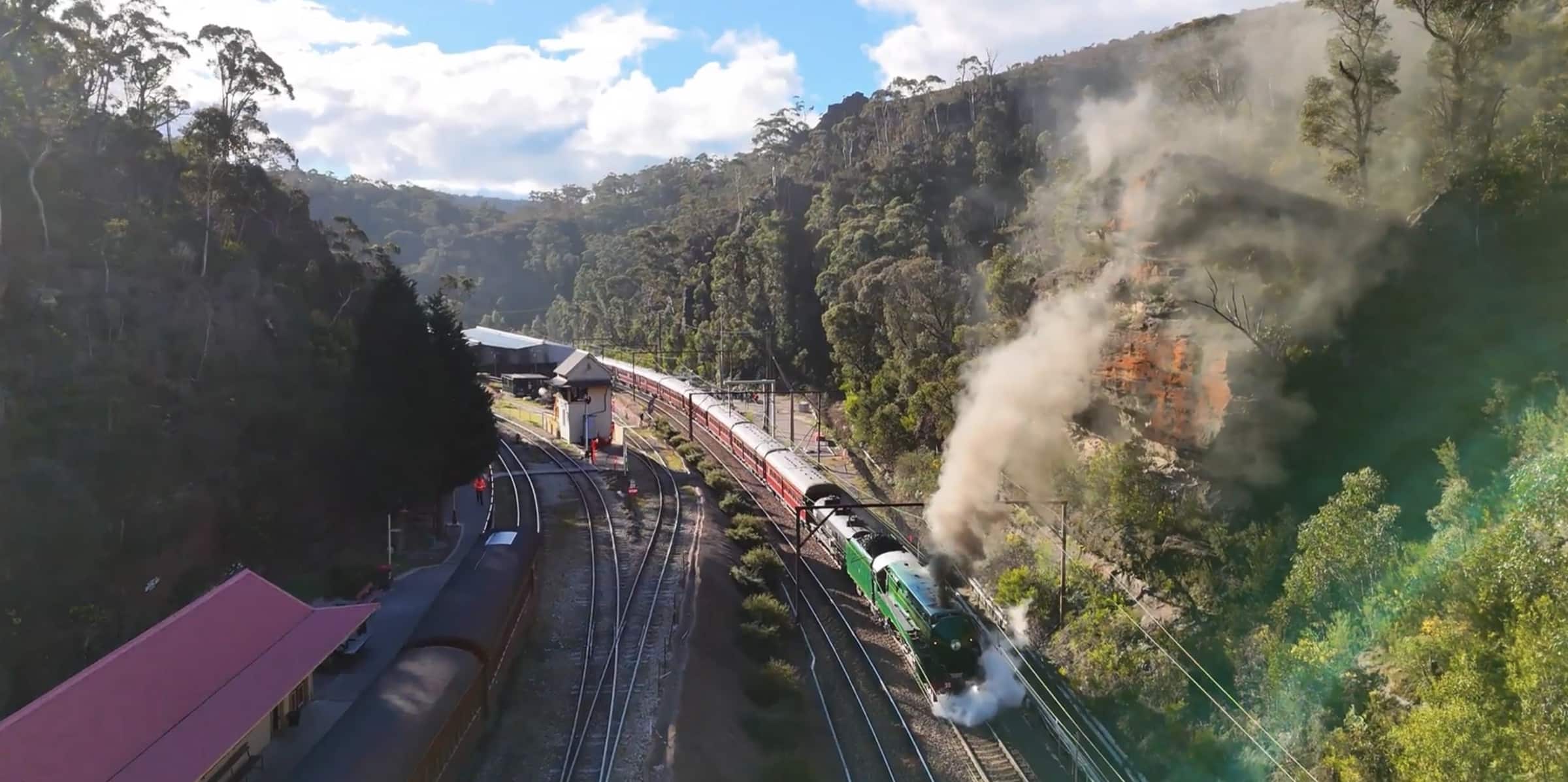
We filmed the 3801 steam engine running through the Blue Mountains for Transport Heritage NSW. It needed two shooters working simultaneously from different locations, both flying drones, both on completely different schedules, on a Saturday. That isn’t a scheduling problem you solve with goodwill. You either have the people or you don’t.
And the airport run I opened with: a 2pm phone call for a 9pm arrival.
We just have the ability to make these things happen for our clients. And if things can just happen, that’s great for everyone.
Ask any company you’re considering for their version of that story, and make sure it’s something they’ve actually done rather than something they reckon they could do.
5. How big is your team?
Received wisdom says small is nimble. Big agencies are slow, boutiques move fast. In video production I think that’s backwards.
A small team is flexible only when it’s empty. If you happen to be their one client this week, you’ll get remarkable service. But the moment they’ve got two other shoots booked, either they can’t move for you, or they bring in freelancers and you pay a premium for people who don’t know your brand.
Scale is what actually buys flexibility. Multiple shooters means somebody is free. Multiple producers means your edit can be pushed up the queue without another client’s work falling over. Account managers and production coordinators exist so that projects keep moving whether or not one person is having a bad week.
None of that means you should hire the biggest company you can find. It means you should ask what the size actually buys you, and be sceptical of anyone offering nimbleness as a virtue without explaining how it survives them getting busy.
The thing I’d ask us
Fairness demands the other half of that argument, because scale does come with a real cost, and it isn’t speed. It’s quality.
The real difficulty of having a large team is maintaining quality. You need to get several people across the standards for different clients and practices. If one person drops the ball, then the ball gets dropped for the whole project.
Every company past a certain size runs into this, and most pretend they don’t. We’ve built internal software to manage it: a production pipeline where every stage gets checked off, where the likely failure points are flagged before they turn into failures, and where mistakes become training rather than repeat offences. It’s an ongoing job rather than a solved one.
So if you’re talking to a larger company, ask them what stops the quality slipping when they’re busy. If the answer is just that they’re very careful, be worried. Careful isn’t a system.
First, though: one-off or partnership?
Everything above shifts depending on this answer, so it’s worth settling before you start ringing people.
If you need one video, whether that’s a brand film or a conference wrap or a single campaign, you want a company that will go deep on that one thing.
If you need video continually, you’re not really buying a project. You’re hiring a department: someone who learns your brand, holds your history, and doesn’t need re-briefing every quarter. That’s a different relationship, priced differently, and judged on consistency across a year rather than on any one deliverable.
Plenty of buyers start with a one-off and work out a year later that they’ve been running a partnership by accident, with a supplier they picked for the wrong job.
The short answer
Ask about measurement, contact, capacity, flexibility and team size. Ask what stops quality slipping when they get busy. And work out which relationship you’re actually buying before you start.
The showreel tells you they can shoot. These questions tell you what the next twelve months will be like.
Viewix is a Sydney video production company. We make video that’s measured on what it returns. If you’ve got questions like these, ask us and we’ll answer them straight.



Leave a Reply